Dowsstrike2045 Python Errors and Fixes: Troubleshooting Guide
 Mian Bilal Ch
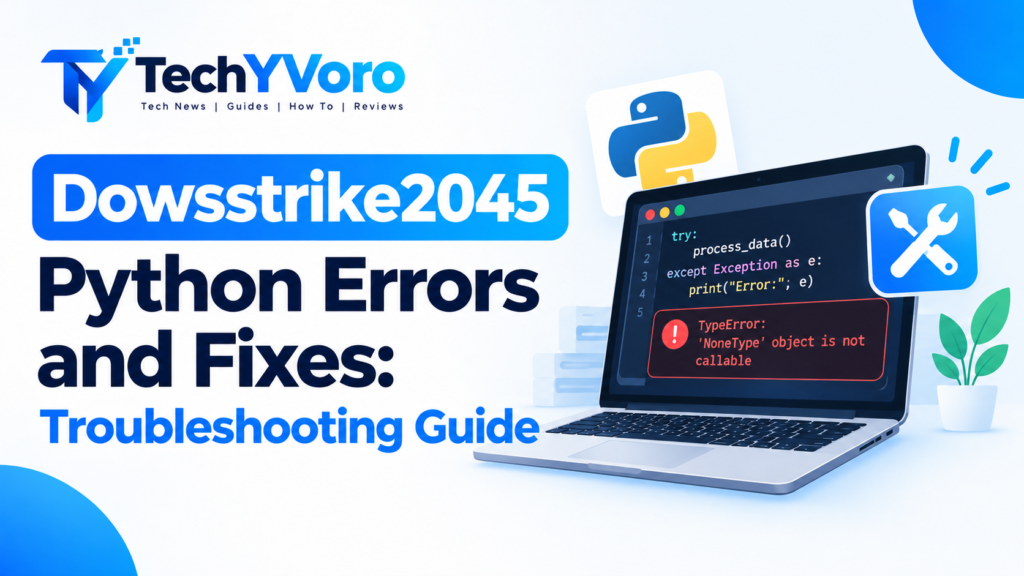
If Dowsstrike2045 is producing Python errors, start by identifying the exact exception rather than reinstalling packages or changing your Python configuration at random. A ModuleNotFoundError, SyntaxError, dependency conflict, and file-permission error each point to different possible causes. The safest approach is to inspect the traceback, verify the Python interpreter and project files, and apply a fix only when the underlying cause is understood.
One important limitation: the exact identity, official source code, and documented requirements of Dowsstrike2045 have not been independently established here. The troubleshooting steps below are based on standard Python behavior; they should not be interpreted as confirmation that every listed error occurs in this particular software.
What Does a Dowsstrike2045 Python Error Mean?
A Python error means that Python encountered a problem while parsing code, importing a module, executing an operation, or accessing a resource. The error message and traceback usually provide the best starting point for finding the cause.
When an unfamiliar program is associated with a Python error, there are three possibilities to distinguish:
- Python environment problem: The wrong interpreter is running, or the required dependency is unavailable in that environment.
- Project problem: A file, import, configuration setting, or dependency is missing or incompatible.
- Unverified software problem: The downloaded files or instructions may not correspond to a documented, maintained project.
The name Dowsstrike2045 alone does not tell us which explanation is correct.
For background on the software’s uncertain identity and safety considerations, see the existing TechyVoro Dowsstrike2045 Python explainer.
Common Dowsstrike2045 Python Errors and Their Possible Causes
The following table maps common Python error messages to sensible first checks. These are general diagnostic possibilities, not verified reports from a Dowsstrike2045 installation.
| Error or symptom | Possible cause | First action |
|---|---|---|
| Failed to load or start | Missing file, invalid configuration, or an underlying exception | Read the complete terminal output |
ModuleNotFoundError | Python cannot locate the requested module | Check the active interpreter and module location |
ImportError | An import cannot be completed as requested | Inspect the import statement and package compatibility |
SyntaxError | Invalid Python syntax or an unsupported language feature | Inspect the reported line and surrounding code |
ModuleNotFoundError for a dependency | Required third-party package is unavailable | Check verified project requirements |
PermissionError | The process cannot access a file or resource | Check the path and appropriate file permissions |
| Script exits unexpectedly | An uncaught exception or external process failure | Inspect the traceback and exit status |
A message such as “failed to load” is not a complete diagnosis. It may describe the symptom rather than the underlying exception.
How to Fix Dowsstrike2045 Python Errors Step by Step
Work through these checks in order. Start with information gathering, then make changes only when the evidence points to a specific cause.
1. Read the complete Python traceback
A traceback shows the chain of calls leading to an exception. The final line commonly identifies the exception type and a brief explanation, while earlier lines help identify the code involved.
For example:
Traceback (most recent call last):
  File "main.py", line 3, in <module>
    import example_module
ModuleNotFoundError: No module named 'example_module'
This example is illustrative, not a real Dowsstrike2045 error. It indicates that Python could not locate example_module in the import context used for that execution.
Record the following details before changing anything:
- The complete final exception message.
- The filename and line number associated with the failure.
- The command used to start the program.
- The Python version and environment.
- Any recent change to the code or installed dependencies.
If the traceback contains several exceptions, look at the final exception and any earlier exception linked by a message such as During handling of the above exception.
2. Check which Python interpreter is running
Multiple Python installations can exist on the same computer. A package installed for one interpreter may be unavailable to another.
Run the relevant command in your terminal.
Windows:
py --version
py -m pip --version
To list Python installations registered with the Windows launcher, where supported:
py -0pmacOS or Linux:
python3 --version
python3 -m pip --version
These commands display version and pip information; they do not verify that Dowsstrike2045 itself is installed or compatible.
If you have an existing project environment activated, inspect the interpreter used by that environment:
python -c "import sys; print(sys.executable)"On macOS or Linux, replace python with python3 if that is the appropriate command for the active environment. On Windows, use the environment’s python command or its full interpreter path.
The key is consistency: use the same interpreter for running the script and inspecting or installing its dependencies. The Python Packaging User Guide explains the relationship between interpreters, pip, and virtual environments.
3. Fix a ModuleNotFoundError without guessing
If you encounter:
ModuleNotFoundError: No module named 'dowsstrike2045'Python cannot locate the named module through its current import mechanism. That does not automatically mean a package with the same name exists on a public package index.
First, inspect the project’s directory. Look for its documented entry point, source files, dependency declarations, and installation instructions. Common dependency and project metadata files include:
requirements.txtpyproject.tomlsetup.pyin older projects
Check whether the import refers to a local module that should be included in the downloaded source, or an external dependency that the project’s documentation identifies.
You can inspect Python’s module search paths with:
python -c "import sys; print('\n'.join(sys.path))"Use the appropriate interpreter command for your system.
If a documented dependency is missing, install it using the project’s verified requirements. Do not automatically run pip install dowsstrike2045 just because the error contains that name.
A Python import name and the name of the package distributed through an installer do not always match. See the official Python Packaging User Guide for installation guidance.
4. Investigate an ImportError
An ImportError differs from a basic missing-module error. Python may find a module but fail to import a requested name or complete the import.
Possible explanations include:
- The installed package version does not provide the requested function or class.
- The import statement references the wrong name.
- A local file shadows a package with the same name.
- Two components have incompatible requirements.
- A circular import prevents a name from being available at the expected time.
Inspect the exact import statement and the final traceback. If the project documents a supported package version, compare it with the installed version in the active environment.
Avoid upgrading every dependency at once. Broad upgrades can introduce new incompatibilities and make the original problem harder to identify.
5. Correct Python syntax errors
A SyntaxError generally indicates that Python cannot parse the code as written. Common causes include a missing colon, mismatched brackets, an unclosed string, or syntax that is unsupported by the interpreter version.
For example, this code is invalid:
if ready print("Starting")The corrected version is:
if ready: print("Starting")The example illustrates a normal Python syntax error; it does not establish that Dowsstrike2045 contains this mistake.
When debugging a syntax error:
- Open the file and line identified by the traceback.
- Inspect the surrounding lines, not just the indicated character.
- Check indentation, punctuation, quotes, and brackets.
- Confirm that the installed Python version supports the syntax used.
- Rerun the script after making a targeted correction.
If the source code is unfamiliar or its origin cannot be verified, do not execute it merely to experiment with possible fixes.
6. Resolve missing dependencies and version conflicts
A project may depend on third-party libraries. If a required library is absent or incompatible, the program may fail during startup or while performing a particular operation.
First, locate the project’s documented dependency list. If a trusted project provides requirements.txt, you can inspect it before installation.
After verifying the source and requirements, create an isolated environment for the project rather than modifying system-wide packages.
Windows:
py -m venv .venv
.venv\Scripts\Activate.ps1
py -m pip --version
After activation, use the environment’s python command to install and run the project.
macOS or Linux:
python3 -m venv .venv
source .venv/bin/activate
python -m pip --version
Once you have verified the project’s dependencies, install them using its documented instructions. For a trusted project that provides a requirements file:
python -m pip install -r requirements.txtDo not run this installation command against an untrusted or unexplained requirements file. Such files may specify unfamiliar packages or source locations.
A virtual environment separates project dependencies from those of other Python environments. It is not a security sandbox and does not make malicious code safe to execute. See the official Python venv documentation.
7. Check Python-version compatibility
A project may require a particular Python version because it uses language features or dependencies that are incompatible with other releases.
Check the version reported by the interpreter and compare it with the project’s official compatibility documentation, if available. Also check whether any dependency imposes its own Python-version requirement.
Do not assume that installing the newest Python release will solve the problem. A project designed for an older interpreter may require a different supported version, while an outdated interpreter may lack features the code needs.
If no trustworthy compatibility information exists for Dowsstrike2045, its supported Python versions remain unknown.
8. Investigate file paths and permission errors
A script can fail because it cannot locate a file or access a resource. Before changing permissions, check:
- Whether the required file actually exists.
- Whether the command is running from the expected working directory.
- Whether a relative path points to the intended location.
- Whether the current account has the necessary access.
- Whether the file is locked or being used by another process.
You can inspect the current working directory with:
import osprint(os.getcwd())If the project expects a configuration file in a particular directory, verify its location against the documented project layout.
Avoid running Python as an administrator or using sudo simply to bypass an unexplained permission error. Elevated privileges increase the consequences of executing unsafe code. Correct the file path or permission issue when the cause is understood.
9. Clear the pip cache only when appropriate
Clearing the package cache is sometimes useful when investigating a suspected cached-build or download problem. It is not a universal fix for Python import errors, syntax mistakes, or incorrect project paths.
First, inspect the cache:
python -m pip cache infoTo remove cached files, pip provides:
python -m pip cache purgeThese commands should be run using the same appropriate Python environment. On Windows, py -m pip may be more suitable when using the Windows Python launcher.
The purge command removes pip’s cached files; it does not repair broken source code or automatically resolve incompatible dependency requirements. Use it only when there is a reason to investigate the cache. The official pip cache documentation describes the available operations.
10. Retest the program and confirm the result
After correcting a specific, verified problem, rerun the relevant command and check whether the original exception has disappeared.
If it persists:
- Capture the new complete traceback.
- Check whether the exception changed.
- Verify the interpreter and dependency versions again.
- Review the last change you made.
- Revert an unnecessary change if it introduced another problem.
A different exception may indicate that the first issue was resolved and execution reached another failing step. Do not assume that every subsequent error has the same cause.
How to Diagnose Python Import and Environment Problems
The following diagnostic commands can help distinguish a Python installation problem from a project-specific problem.
| Command | What it checks |
|---|---|
python --version | The active command’s Python version |
python -m pip --version | The pip installation associated with that interpreter |
python -c "import sys; print(sys.executable)" | The interpreter’s executable path |
python -c "import os; print(os.getcwd())" | The current working directory |
python -c "import sys; print('\n'.join(sys.path))" | The module search paths |
Use python3 instead of python on systems where that is the appropriate command. These checks provide diagnostic information; they do not establish that an unknown software package is legitimate.
A practical rule is to investigate the interpreter and search path before installing a package. This helps prevent a common mistake: installing a dependency into one Python environment while running the program with another.
Safety Checks Before Running Unfamiliar Python Code
If you cannot establish the origin of Dowsstrike2045 or verify its installation instructions, stop before executing the code. A troubleshooting guide should not encourage readers to run unknown scripts just to see what happens.
Use this checklist:
- Verify the publisher or maintainer through a trustworthy source.
- Inspect the source code and dependency declarations where feasible.
- Check installation commands before running them.
- Avoid unexplained PowerShell commands, shell scripts, or administrator instructions.
- Do not expose passwords, API keys, or other credentials to unfamiliar software.
- Use an appropriately isolated testing environment when conducting authorized analysis.
- If the source cannot be verified, do not proceed with execution.
A virtual environment helps isolate Python packages, but it does not prevent code from accessing files, using the network, or performing other actions allowed to the running process. Antivirus scans and code inspection can help identify some risks, but neither guarantees that software is safe.
For related background, TechyVoro’s Dowsstrike2045 Python identity and safety guide discusses the distinction between a software name and independently established information about a project.
Frequently Asked Questions
Why is Dowsstrike2045 Python not working?
The cause cannot be determined from the name alone. Read the complete traceback, check which Python interpreter is running, inspect the project’s files, and verify its documented dependencies before attempting a fix.
How do I fix the module-not-found error?
Check whether the import refers to a local module or an external dependency. Verify the active interpreter and module search path, then follow the project’s trusted installation instructions if a required package is genuinely missing.
Can a virtual environment fix dependency errors?
It can resolve conflicts caused by mixing project dependencies with packages installed in other environments. It will not repair syntax errors, missing source files, or incorrect import statements by itself.
Should I install a package named dowsstrike2045?
Not without verifying that the package is genuine and is the one the project actually requires. A module name in a traceback does not establish that a corresponding public package exists or that installing it is safe.
What should I do if the error persists?
Save the full traceback, note your Python version and the command used to start the script, and review the changes made during troubleshooting. If the source or publisher remains unverified, do not keep experimenting with unknown installation commands.
Conclusion: Diagnose First, Then Apply the Fix
The most reliable way to troubleshoot Dowsstrike2045 Python errors is to work from the actual exception rather than assume that every failure requires a reinstall. Check the traceback, confirm the active interpreter, inspect the project files, and verify the documented dependencies before changing your environment.
If you cannot establish the software’s origin or its requirements, do not install a similarly named package or execute unfamiliar commands as a shortcut. Accurate diagnosis and safe handling matter more than making the error disappear at any cost.
For more software-related guidance, explore the TechyVoro Software category.

One Comment